
- By Charlotte Brown
- January 22, 2026
In professional kitchens, infused olive oils offer more than flavor—they provide precision.
By capturing the essence of fresh herbs, botanicals, and aromatics in extra virgin olive oil, chefs gain a reliable way to layer complexity, enhance aroma, and finish dishes with intention.
Across fine dining, catering, and high-volume operations, chefs rely on infused olive oils for their controlled, repeatable flavor. They eliminate variability, reduce prep time, and deliver consistent results service after service.
When crafted with care, infused olive oils become an extension of the chef’s pantry: versatile, expressive, and grounded in technique.
What Are Infused Olive Oils?
Infused olive oils are extra virgin olive oils that have been naturally infused with fresh herbs, botanicals, or aromatic ingredients to impart flavor, aroma, and character.
Unlike compound oils or artificially flavored olive oils, true infused olive oils derive their taste directly from the ingredients themselves—not added essences or flavoring agents.
How Infused Olive Oils Differ from Other Flavor Oils:
- Infused olive oils: Fresh ingredients are steeped in extra-virgin olive oil, allowing natural oils and aromatics to blend with the base oil.
- Compound oils: Often blended or emulsified with solids, purées, or fats, which can limit shelf life and consistency.
- Artificially flavored oils: Use extracts or flavorings that may lack depth and can taste one-dimensional or overpowering.
Common Categories of Infused Olive Oils:
Professional kitchens typically rely on two primary infusion profiles:
- Herbal infusions: Such as basil or herbs de Provence, which bring savory depth and familiarity to Mediterranean, grilled, and vegetable-forward dishes.
- Citrus and aromatic infusions: Like makrut lime leaf, which introduces brightness, lift, and aromatic complexity; ideal for seafood, Asian-inspired cuisine, and desserts.
Why Extra Virgin Olive Oil Is the Preferred Base For Infused Oils:
Extra virgin olive oil provides the ideal foundation for infusion due to its natural stability, mouthfeel, and nuanced flavor.
Its structure carries aromatics effectively without masking delicate notes, allowing infused ingredients to remain clear and expressive.
When properly infused, EVOO enhances—not competes with—the dish, giving chefs a refined, versatile flavor tool that integrates seamlessly into their cooking.
The Craft Behind Quality Infused Olive Oils
Exceptional infused olive oils begin with technique. While the end result may appear simple, achieving clean, balanced flavor requires careful control at every stage—from ingredient selection to infusion timing.
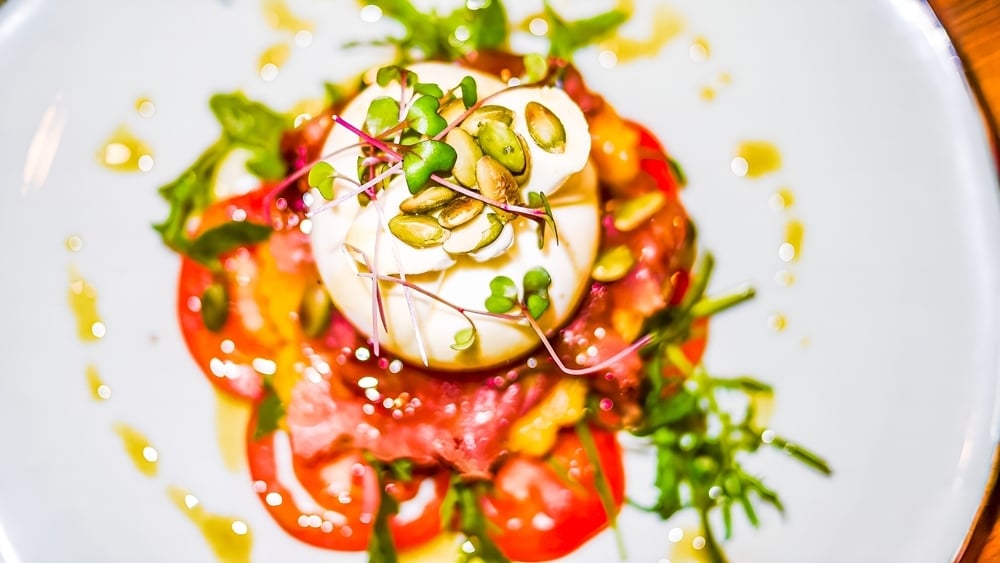
How Olive Oil Infusion Techniques Preserve Freshness and Aroma
Professional-grade infused olive oils rely on methods designed to protect delicate aromatics and prevent flavor degradation:
- Cold infusion gently extracts flavor from fresh herbs or botanicals over time, preserving volatile aromatic compounds and maintaining clarity.
- This method is ideal for ingredients like basil or citrus leaves, where freshness and brightness are essential.
- Heat-assisted infusion, when used judiciously, accelerates flavor transfer but requires precise temperature control.
- Excess heat can mute aromatics or introduce bitterness, which is why high-quality producers apply it selectively and briefly.
The goal is balance: allowing the ingredient’s natural character to fully express itself without overwhelming the olive oil or the finished dish.
Why Ingredient Sourcing Matters:
The quality of an infused olive oil is only as strong as the ingredients used to create it. Fresh herbs, leaves, and botanicals deliver brighter aroma, cleaner flavor, and a smoother mouthfeel than dried or artificial alternatives.
High-quality sourcing results in:
- More pronounced, natural aromatics
- A rounder, more integrated palate
- A clean finish that enhances, rather than distracts from, the dish
For chefs, this translates to confidence—knowing the oil will perform consistently, plate after plate.
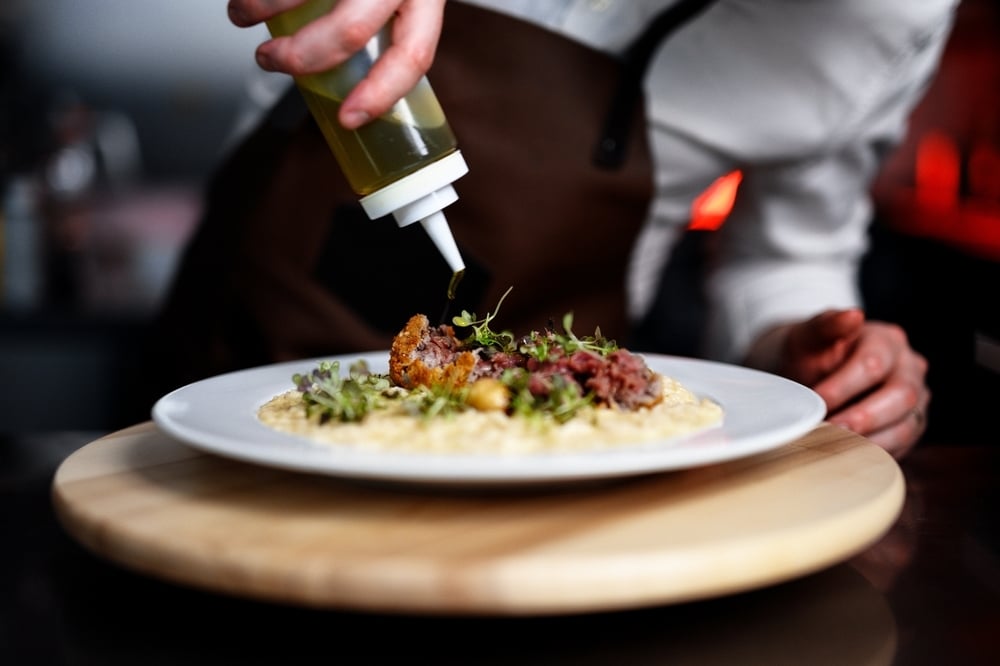
Professional Applications for Infused Olive Oils
In professional kitchens, infused olive oils allow chefs to introduce layered flavor and aromatic impact with minimal additional prep—while maintaining precision and consistency across services.
Sauces and Emulsions:
Infused olive oils integrate seamlessly into sauces and emulsions, adding depth without the need for additional aromatics.
Common applications include:
- Vinaigrettes with built-in herbal or citrus notes
- Aioli and mayonnaise with subtle aromatic complexity
- Herb sauces where infused oil replaces fresh herbs for consistency
Marinades and Proteins:
Infused olive oils provide an efficient way to layer flavor onto proteins without extended marination times. Used as a base for marinades or brushed directly onto proteins before cooking, they deliver even coverage and controlled intensity.
Ideal uses include:
- Poultry and pork with herbal infusions
- Fish and shellfish with citrus or aromatic oils
- Finishing grilled or roasted meats with a light drizzle post-cook
Plating and Finishing:
As finishing oils, infused EVOOs elevate both presentation and aroma.
- A final drizzle adds visual appeal while releasing aromatic compounds at the moment of service—enhancing the guest experience before the first bite.
Dessert Applications:
Infused olive oils are increasingly used in pastry and dessert applications, where contrast is key. Citrus and aromatic oils bring brightness to rich or creamy desserts, while herbal oils can introduce unexpected depth.
Applications include:
- Drizzling over fruit, ice cream, or custards
- Incorporating into cakes or short doughs
- Pairing with chocolate, vanilla, or stone fruit for balance
Choosing the Right Infused Olive Oil for the Dish
Selecting an infused olive oil is a matter of balance. Here’s helpful table to refer to:
|
Infused Olive Oil Profile |
Flavor Characteristics |
Best Applications |
Why Chefs Use It |
|
Herbal |
Savory, herb-forward, rounded |
Grilled and roasted meats, salads, Mediterranean dishes, finishing sauces |
Builds depth and cohesion while preserving ingredient identity |
|
Citrus & Aromatic |
Bright, citrusy, floral, high-toned |
Seafood, ceviche, Asian-inspired dishes, desserts |
Lifts richness, sharpens contrast, and enhances aromatic finish |
Used intentionally, infused olive oils act as seasoning tools rather than flavor additions—allowing chefs to fine-tune dishes with consistency, efficiency, and control.
Maison de Choix Infused Extra Virgin Olive Oils: Perfect For Any Chef’s Toolkit
At Maison de Choix, each oil is crafted with extra virgin olive oil as its base and infused to preserve the integrity of the ingredient, allowing chefs to apply flavor with confidence and precision.
Basil Infused Extra Virgin Olive Oil
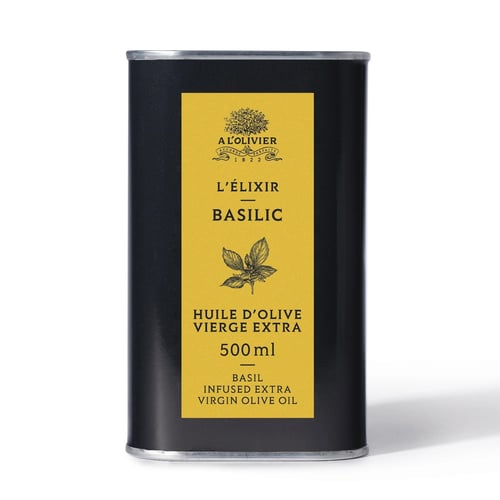
Flavor profile: Intense, fresh basil infused olive oi with clean herbal lift
This infusion captures the brightness of freshly picked basil without the variability of seasonal herbs. It integrates seamlessly into both savory and sweet applications, making it a versatile staple across menus.
Ideal applications include:
- Caprese, goat cheese, and fresh pasta dishes
- Pan-fried red mullet and chilled soups such as gazpacho
- Strawberries or vanilla ice cream for a refined, unexpected finish
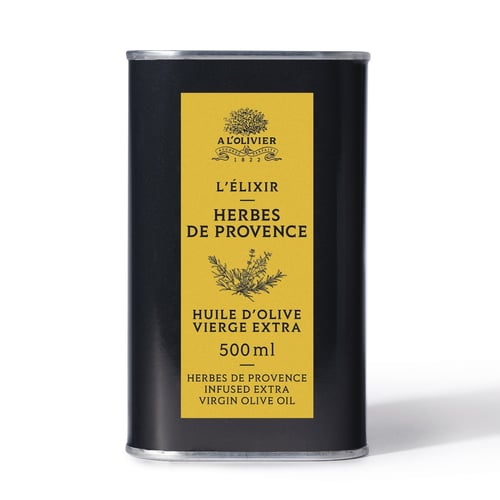
Herbs de Provence Infused Extra Virgin Olive Oil
Flavor profile: Savory rosemary and thyme with a balanced herbal backbone
This oil delivers the familiar structure of southern French herbs in a consistent, easy-to-use format. It performs especially well in warm applications where depth and aroma are essential.
Ideal applications include:
- Grilled or slow-cooked meats, including beef, lamb, pork, and poultry
- Green or mixed salads
- Vinaigrettes paired with sherry vinegar for added complexity
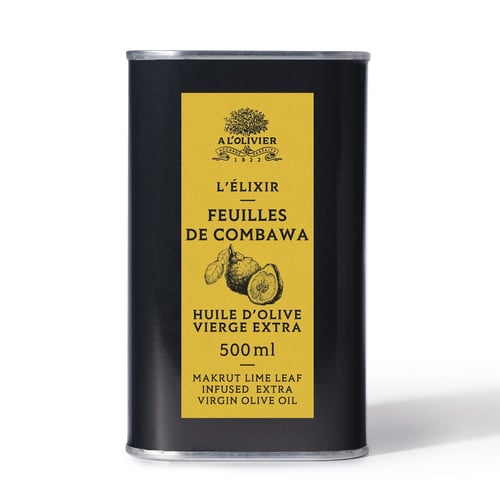
Makrut Lime Leaf Infused Extra Virgin Olive Oil
Flavor profile: Bright lemongrass, rose, and eucalyptus notes
Aromatic and expressive, this infusion brings freshness and contrast to both savory and sweet preparations. Its high-toned profile makes it particularly effective as a finishing oil.
Ideal applications include:
- Scallop or fish ceviche
- Steamed white fish and Thai-inspired salads
- Vanilla-forward desserts seeking lift and aromatic contrast
Elevate Every Plate with Maison de Choix Infused Olive Oils
Infused olive oils, when crafted with care, become more than flavor additions—they become tools for expression. By combining ingredient integrity, precise infusion, and extra virgin olive oil as a foundation, Maison de Choix offers chefs a way to work with confidence and creativity.
Whether used to finish, season, or build a dish from the ground up, Maison de Choix infused olive oils support thoughtful cooking, consistent execution, and elevated presentation—helping chefs refine every plate with intention.